





Three species of sea turtles are commonly observed around Mauritius:
- Hawksbill Turtle (Eretmochelys imbricata)
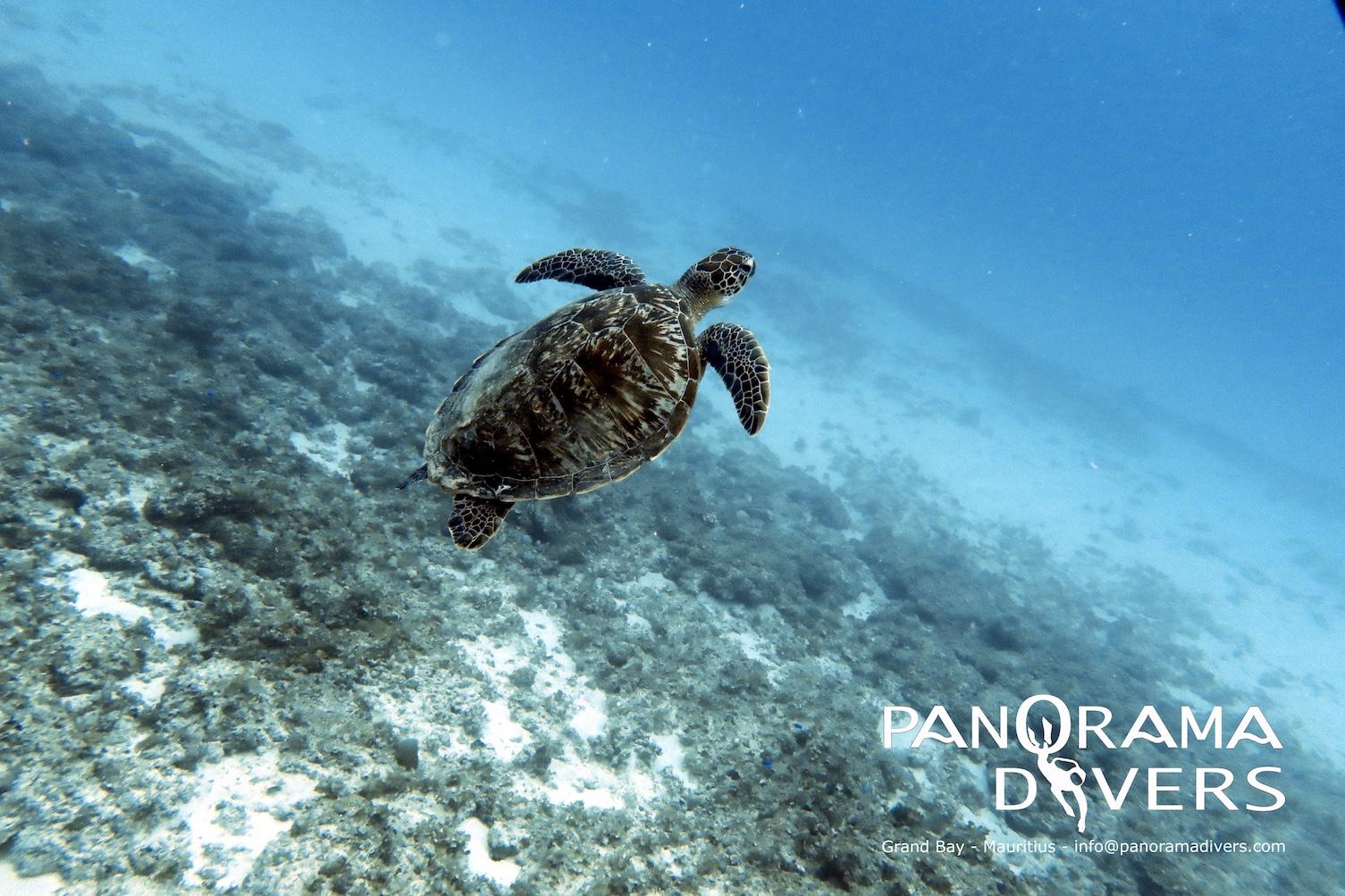
- Green Sea Turtle (Chelonia mydas)
- Loggerhead Turtle (Caretta caretta)
Let’s explore these fascinating species and learn how to observe them responsibly while diving in Mauritius.
Hawksbill Turtle (Eretmochelys imbricata)
Identification and characteristics
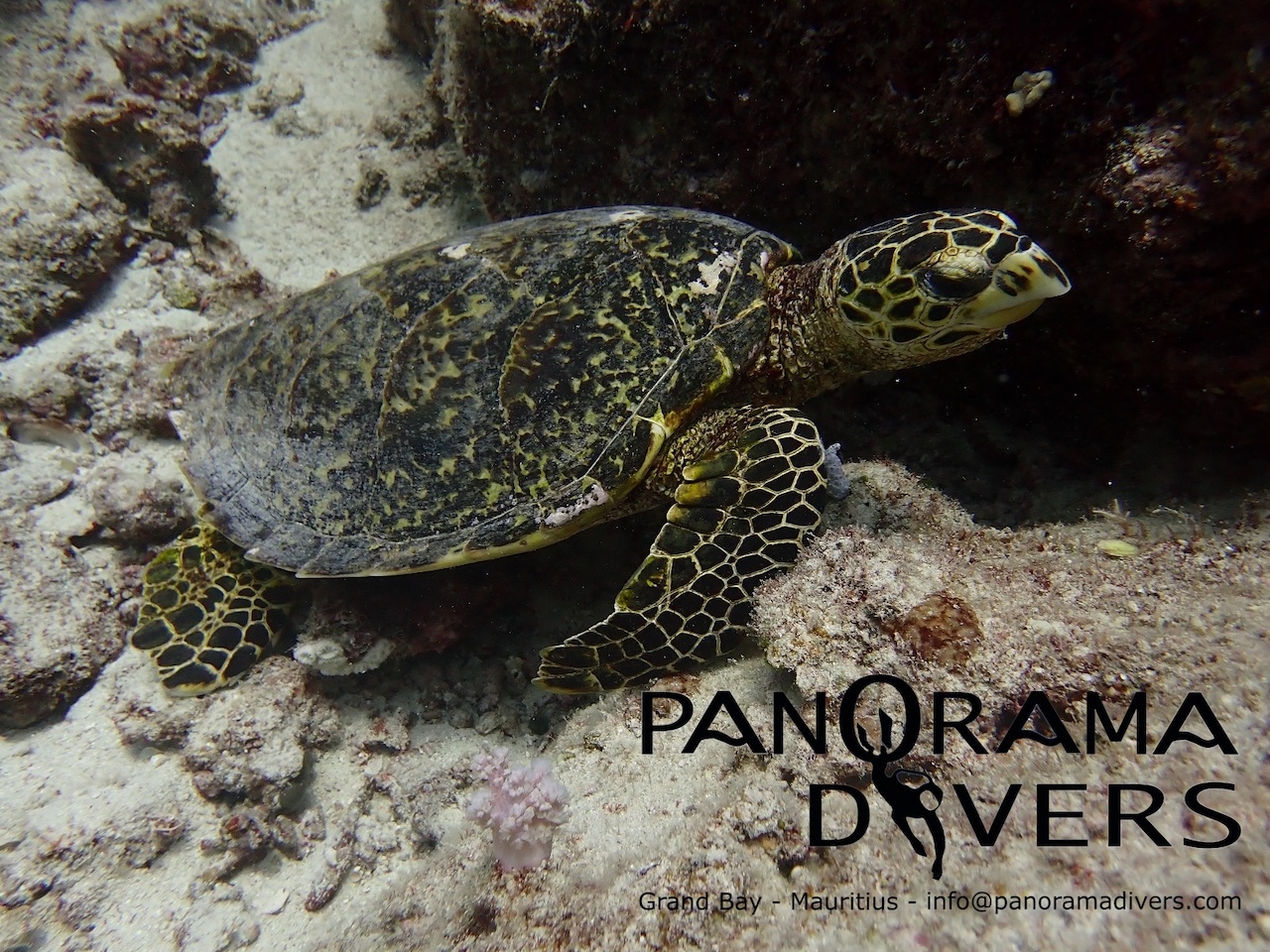
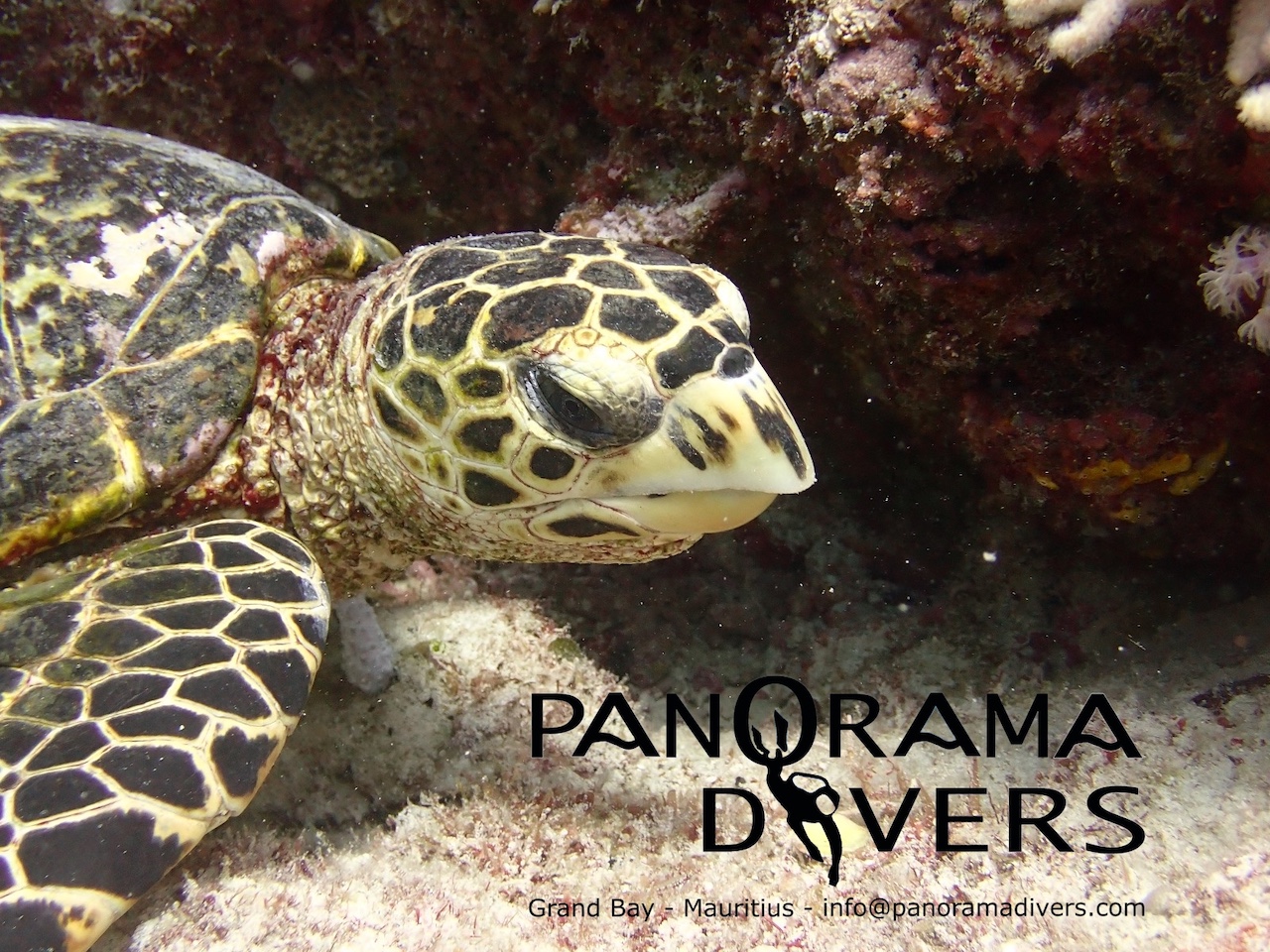
The hawksbill turtle is one of the most visually striking sea turtles. It is easily recognized by:
- Its narrow, pointed beak, resembling a bird’s beak
- A beautifully patterned shell with overlapping scutes
- A relatively smaller size compared to green turtles
Habitat and behavior in Mauritius
Hawksbill turtles are closely associated with coral reefs, making them a common sight for divers in Mauritius. They feed mainly on sponges, which helps maintain reef balance by preventing fast-growing species from dominating corals.
They are often seen:
- Resting under coral ledges
- Slowly moving along reef walls
- Actively feeding during daylight dives
Conservation status
The hawksbill turtle is critically endangered globally. Habitat destruction, illegal shell trade, and climate change pose serious threats. Protecting coral reefs in Mauritius is essential for their survival.
Green Sea Turtle (Chelonia mydas)
Identification and characteristics
Despite its name, the green sea turtle is not green on the outside. The name comes from the greenish color of its body fat, linked to its herbivorous diet.
Key features include:
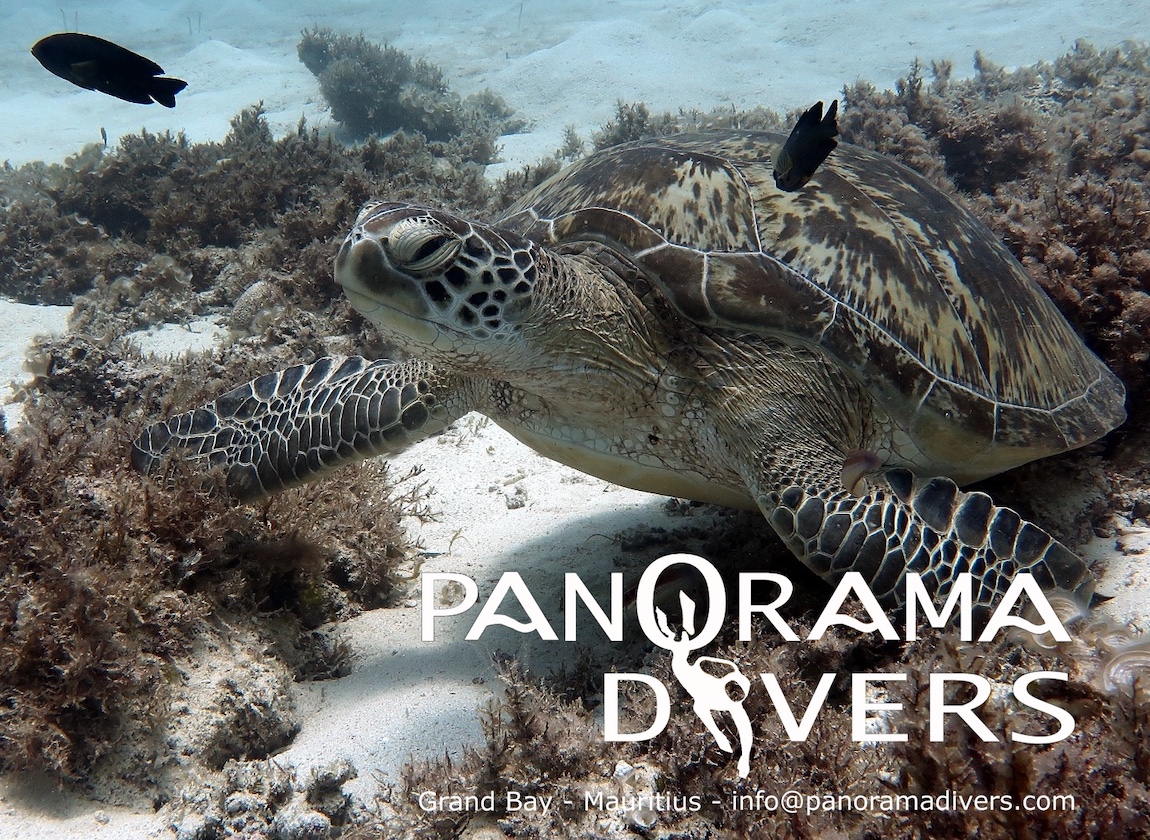
- A smooth, oval-shaped shell
- A rounder head compared to hawksbill turtles
- Large size, making it one of the biggest sea turtles in the world
Habitat and behavior in Mauritius
Green sea turtles favor:
- Seagrass beds
- Shallow lagoons
- Coastal reef areas
They are primarily herbivores, feeding on seagrass and algae, playing a crucial role in keeping seagrass meadows healthy.
Divers often encounter green turtles:
- Grazing calmly in lagoons
- Resting on sandy bottoms
- Gliding effortlessly along reef slopes
Conservation status
The green sea turtle is listed as endangered. Coastal development, boat strikes, and pollution threaten their populations in the Indian Ocean.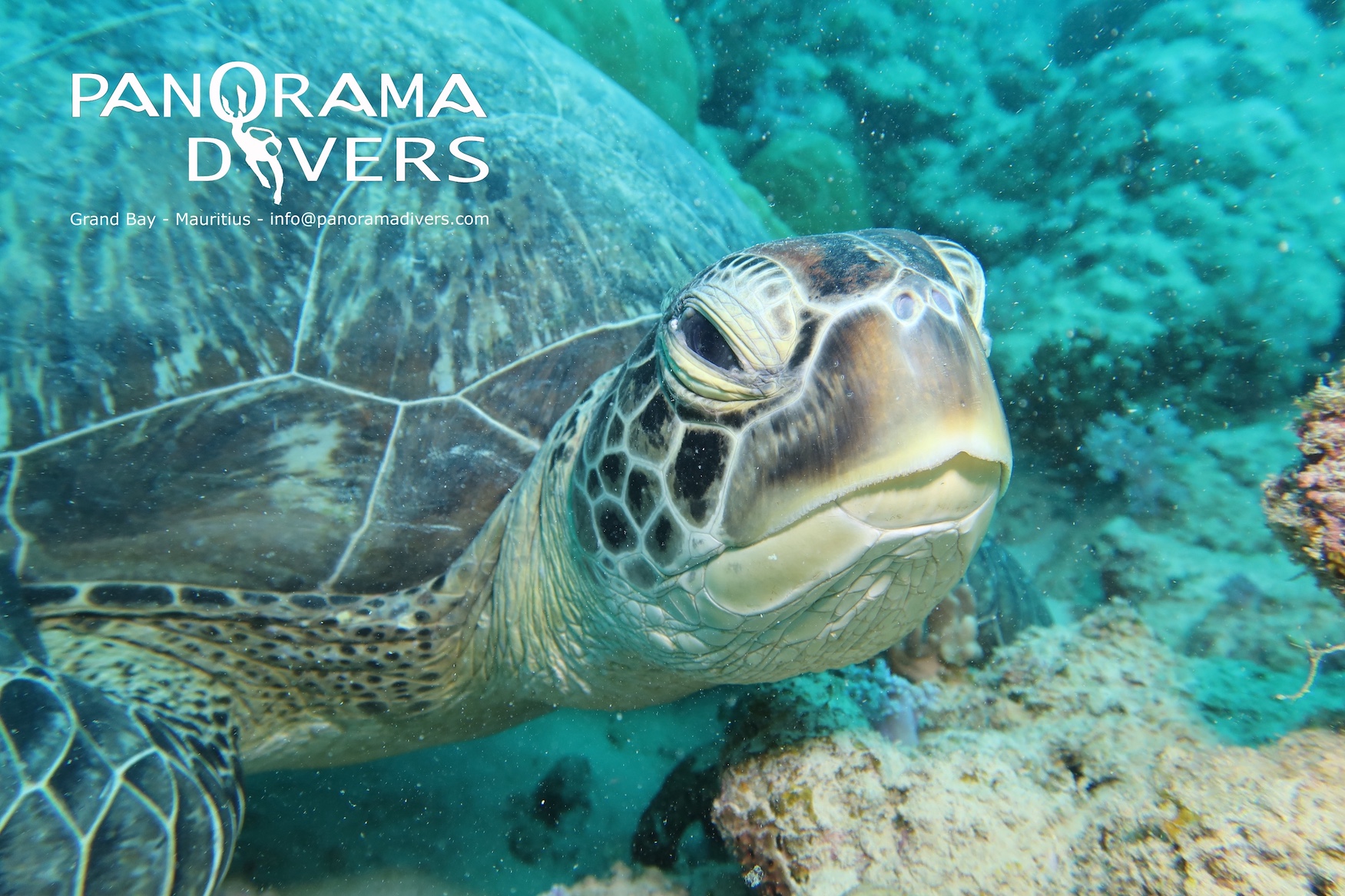
Loggerhead Turtle (Caretta caretta)
Identification and characteristics
The loggerhead turtle is named for its large, powerful head, adapted for crushing hard-shelled prey such as crabs and mollusks.
Distinctive traits include:
- A reddish-brown shell
- Strong jaws
- A more robust appearance
Presence in Mauritius
Loggerhead turtles are less commonly observed around Mauritius than hawksbill and green turtles. They are more pelagic and often found in deeper or offshore waters, but occasional sightings do occur, especially by experienced divers.
Conservation status
Loggerhead turtles are classified as vulnerable. Bycatch in fishing gear and ocean pollution are major threats to their survival.
Diving with Turtles in Mauritius: Responsible Encounters
Mauritius offers exceptional opportunities to observe sea turtles while scuba diving or snorkeling. To protect these fragile animals, divers should follow a few essential guidelines:
- Keep a safe distance and never touch turtles
- Avoid blocking their path to the surface
- Do not chase or surround them
- Maintain excellent buoyancy control to protect reefs
At Panorama Divers, responsible diving practices are a priority, ensuring memorable encounters while preserving marine life for future generations.
Why Sea Turtles Matter
Sea turtles play a vital role in marine ecosystems:
- They maintain healthy coral reefs and seagrass beds
- They contribute to ocean nutrient cycles
- Their presence is a strong indicator of marine ecosystem health
Protecting turtles means protecting the entire underwater world they depend on.
Dive with Turtles in Mauritius
Whether you are a beginner or an experienced diver, encountering a sea turtle in Mauritius is a highlight of any dive. By choosing eco-conscious dive operators and respecting marine life, you contribute directly to their conservation.


